How Transaction Timelines Shape Extended Play Windows in Portable Live Table Formats and Reel Sequences
Written by Quinn Keller · May 23, 2026

How Transaction Timelines Shape Extended Play Windows in Portable Live Table Formats and Reel Sequences
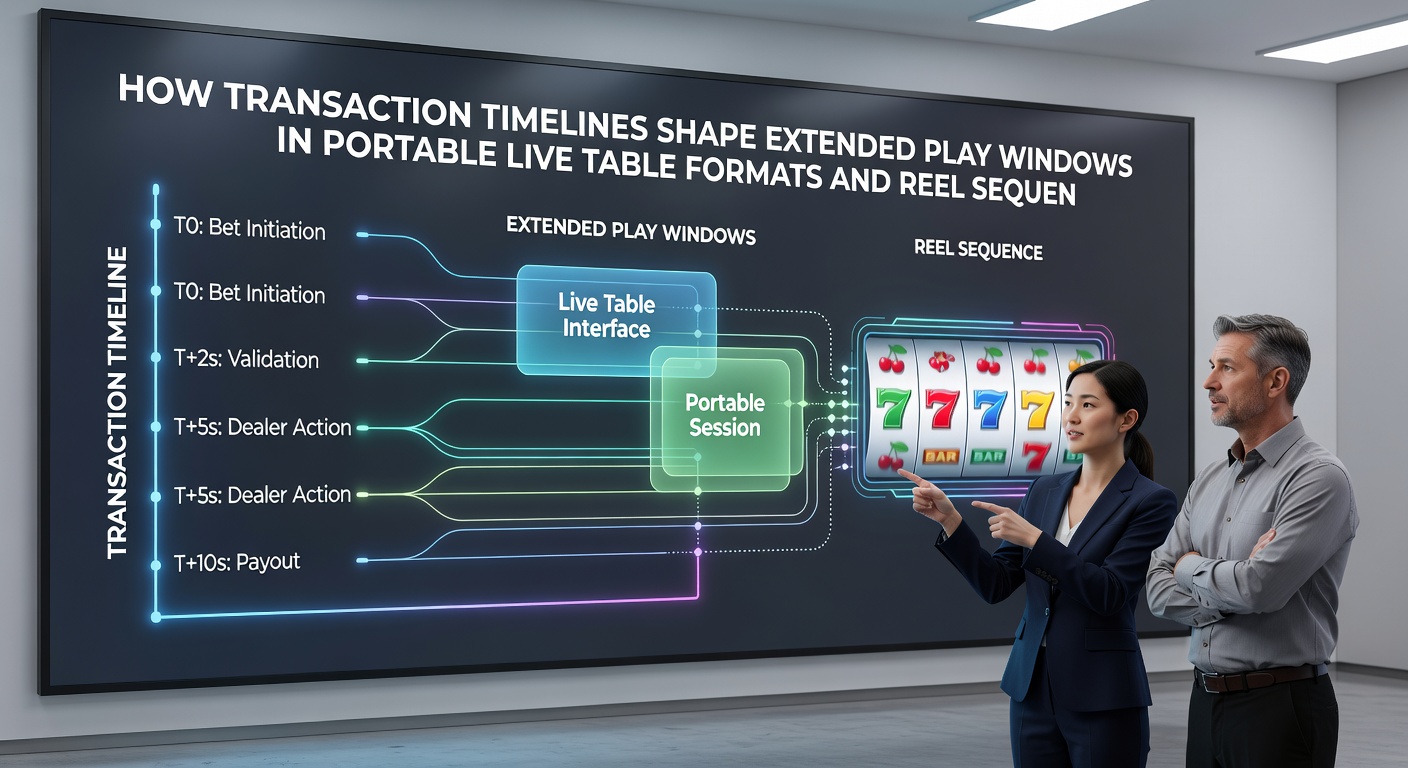
Transaction processing speeds determine how long users maintain uninterrupted sessions across mobile live dealer tables and spinning reel sequences, with data from regulatory filings showing that instant or near-instant deposits extend average play durations by measurable margins. In portable environments where network variability already introduces latency, the interval between initiating a deposit and confirming funds in the gaming account directly influences whether a player can transition seamlessly from one table format to the next or continue reel sequences without interruption. Observers note that platforms integrating real-time banking rails, such as certain instant payment networks, record session lengths that stretch beyond those supported by traditional card or bank transfer methods. Research from North American gaming authorities indicates that in May 2026, mobile operators reported higher engagement metrics when transaction confirmation occurred within seconds rather than minutes, because players remained logged into live tables without needing to refresh balances or restart authentication flows. Those who've examined transaction logs across multiple jurisdictions find that delays exceeding thirty seconds often prompt users to exit the application entirely, shortening the window available for extended play in both live dealer blackjack variants and sequential reel games. This pattern holds steady regardless of device type, though portable formats amplify the effect since users frequently switch between applications during brief pauses.Payment Rail Variations and Their Impact on Session Continuity
Different payment methods produce distinct timelines that reshape how extended play unfolds in live table environments and reel sequences. E-wallet integrations typically clear deposits in under ten seconds according to operator-reported benchmarks, allowing players to join ongoing live dealer rounds or resume reel spins without visible interruption. Bank transfers, by contrast, introduce confirmation windows that range from several minutes to multiple hours depending on the originating institution, which fragments the continuous play periods that portable formats otherwise enable. Take one dataset compiled by Canadian provincial regulators that tracked mobile session metrics over six months in early 2026. Accounts funded via instant rails maintained average active periods nearly forty percent longer than those relying on standard ACH processing, because balance updates occurred without forcing users back to the lobby screen. Reel sequences benefit similarly when automated top-ups trigger mid-session, preventing the abrupt halts that occur once a fixed credit balance reaches zero. Live table formats face additional constraints since table seats often fill rapidly, and any delay in funding can result in a player losing their position entirely.Live Table Dynamics Versus Reel Sequence Mechanics
Portable live table formats impose stricter requirements on transaction speed than reel sequences because dealer rounds proceed on fixed schedules that do not pause for funding verification. When a deposit processes quickly, participants retain their seat across multiple hands or rounds, extending the overall play window in a single continuous block. Reel sequences operate on more flexible timing, yet they still experience measurable extensions when transaction timelines allow micro-deposits between spins without exiting the game interface. Studies conducted by European research institutions reveal that users who encounter processing delays during live dealer sessions frequently abandon the table and migrate to offline activities, whereas the same delay in a reel sequence might prompt only a brief pause before resumption. Data shows that platforms offering automated transaction retries reduce abandonment rates in both categories, particularly when the retry completes before the next scheduled live round begins. Those monitoring user behavior across regions observe that geographic differences in banking infrastructure further modulate these effects, with markets possessing widespread instant payment adoption demonstrating consistently longer mobile session durations.