How Jurisdictional Rules Guide the Availability of Combined Reel and Dealer Options in Wireless Betting Applications
Written by Casey Hoffmann · Jul 23, 2026
How Jurisdictional Rules Guide the Availability of Combined Reel and Dealer Options in Wireless Betting Applications
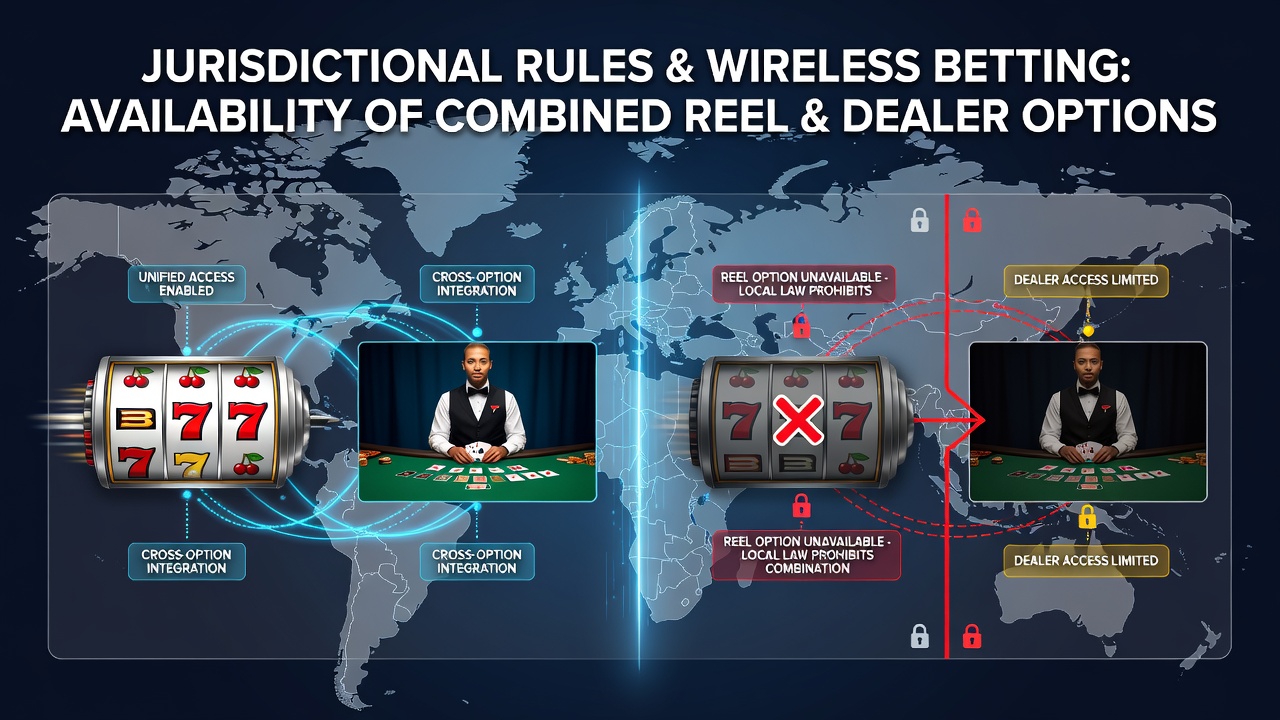
Jurisdictional rules determine which combined reel and dealer features appear in wireless betting applications because licensing authorities set strict boundaries on game types and delivery methods. These frameworks require operators to separate or restrict certain offerings depending on the location of the user and the license held by the platform. Data from regulatory filings shows that mobile applications must comply with location-specific mandates before any hybrid reel and table content becomes accessible to players.
Regional Licensing Structures and Feature Restrictions
Authorities in different regions enforce distinct criteria for what counts as an approved gaming product on handheld devices. In Ontario operators obtain certification through iGaming Ontario and must align reel sequences with live dealer streams under rules that limit simultaneous access in some cases. European frameworks administered by bodies such as the Malta Gaming Authority further segment offerings so that reel games and dealer tables operate under separate compliance streams even when delivered through a single application. Observers note that these separations arise because each jurisdiction evaluates risk profiles independently and then translates those evaluations into technical requirements for software architecture.
Wireless applications therefore embed geofencing and license verification layers that activate or deactivate combined modes based on detected user location. When a player crosses into a new regulatory zone the application adjusts available content without requiring manual intervention. Research conducted by academic teams at the University of Nevada Reno indicates that such automatic adjustments reduce violations while maintaining service continuity across borders.
Technical Implementation of Compliance Controls
Developers integrate rule engines that reference current licensing databases at the moment of each session initiation. These engines check player coordinates against approved territories and then apply filters that either enable or disable reel dealer pairings. In July 2026 several North American regulators updated their technical standards to require real-time reporting of hybrid session data so that oversight bodies can verify adherence to local statutes. The changes mean applications now log every transition between reel and dealer modes with timestamps and jurisdictional identifiers.
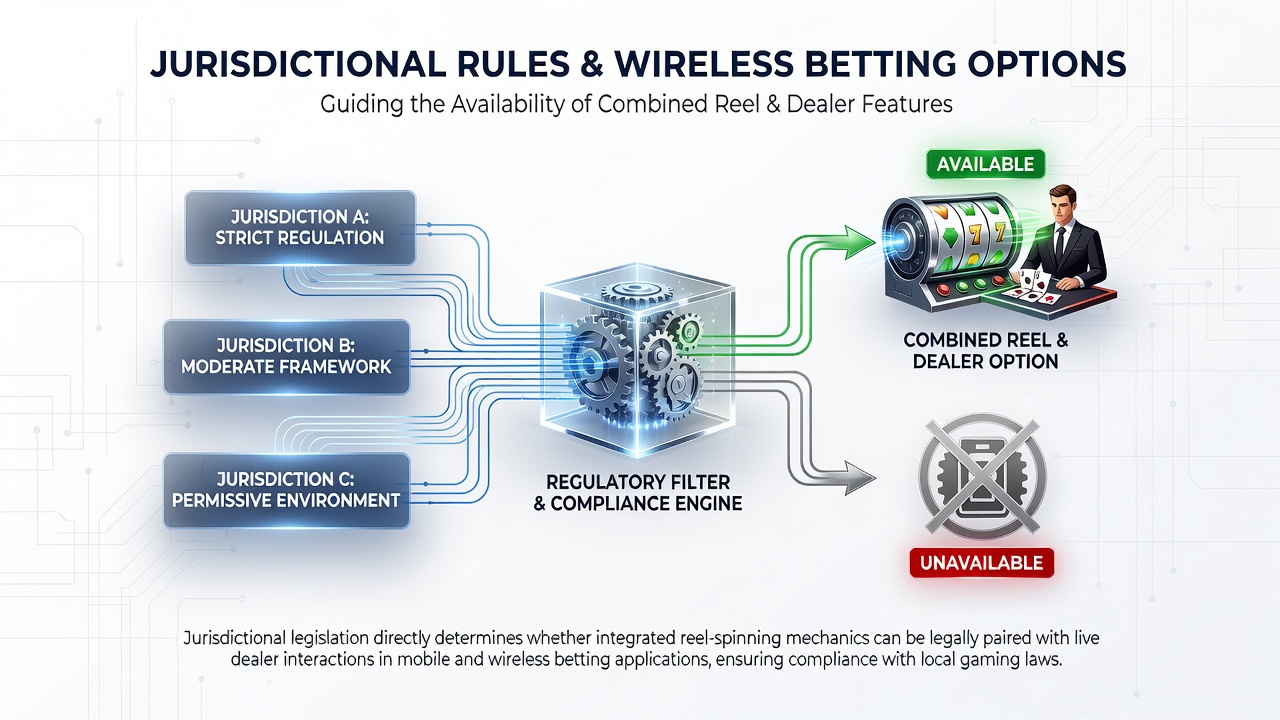
Payment processing modules also tie into these controls because some jurisdictions prohibit certain bonus structures when reel and dealer products appear together. Operators therefore configure bonus engines to recognize jurisdictional flags and adjust promotional credit distribution accordingly. Figures released by the Australian Communications and Media Authority reveal that applications serving Australian users must disable combined features entirely unless the operator holds a specific remote gambling license issued under federal guidelines.
Case Examples from Multiple Markets
One operator serving the Canadian market adjusted its wireless platform after Ontario introduced updated iGaming standards in early 2026. The platform separated reel and dealer lobbies into distinct sections while still allowing users to move between them within a single authenticated session. Another provider operating across several U.S. states implemented state-by-state toggles that activate dealer options only in jurisdictions where live table games receive explicit approval. Those who have examined the resulting data note that session durations remain consistent because the application presents alternative content rather than blocking access outright.
Industry reports from the European Gaming and Betting Association document similar patterns across member states. Applications must maintain parallel compliance profiles so that a user in Belgium sees different hybrid options than a user in the Netherlands even when both connect through the same server cluster. The association further reports that certification bodies conduct periodic audits to confirm that location detection mechanisms function accurately and that feature availability matches the license conditions on file.
Future Adjustments and Ongoing Monitoring
Regulatory bodies continue to refine their approaches as wireless technology evolves. In July 2026 discussions among Canadian provincial regulators focused on standardizing data formats for hybrid game reporting so that cross-border operators can streamline compliance across multiple jurisdictions. Similar conversations took place among Australian state authorities seeking greater alignment between federal and territory level requirements. These efforts indicate that technical standards will likely converge even while substantive rules on combined reel and dealer offerings remain jurisdiction specific.
Conclusion
Jurisdictional frameworks shape every layer of wireless betting applications that offer reel and dealer content together. Licensing conditions dictate which combinations receive approval, technical systems enforce those conditions through geofencing and real-time checks, and ongoing audits verify continued compliance. Operators that serve multiple regions maintain separate compliance profiles for each market while delivering a unified user experience within the constraints set by each authority. The result is a landscape where availability of combined options varies by location yet remains fully traceable to the specific rules governing each jurisdiction.